Composition in Photography
For me, composition is the key to creating beautiful and memorable photography. The most expensive cameras won’t compensate for poor composition when producing a great image, and the cheapest of disposable cameras can produce shots which tell fantastic stories if the composition is right.
There are many technical rules which aim to improve composition, and while it’s very useful to know them, ultimately it is about arranging all the elements to be included in a photograph in a way that the eye finds most aesthetically pleasing. The rule of thirds, the golden ratio, the rule of odds, the golden triangle; these all help to prompt the photographer to think how best to highlight and emphasise the subject of the image, but what’s more important for me is the coupling with patterns, colours, lines, space and depth.
While a painter might start with a blank canvas and meticulously plan the final goal, with photography the parts of the puzzle may already be there. They just need to be arranged in a way that best explores the story you see. This post focusses particularly on how leading lines, symmetry and timing can bring your photograph together.
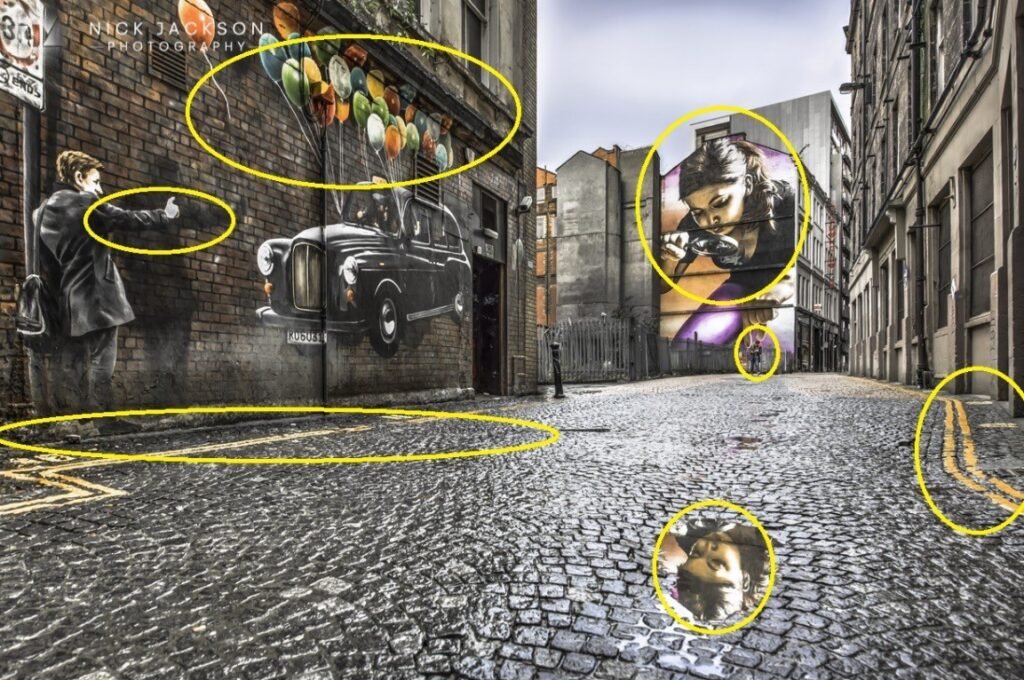
“Glasgow Grafitti Girl”
Glasgow is well known for its graffiti artwork and this shot is a useful tool to help explain how I consider the composition of a scene both from a rules perspective, but also from a more tangible one (texture, patterns, colours).
When I’m looking to shoot a landscape or cityscape I’ll usually take some time to walk around the setting, decide the focal point and consider it from different angles, heights and distances to compose an ideal image in my mind. Often, particularly when shooting notable locations, I try to include new or unusual subjects and angles to reveal a new insight or illicit a different response.
For the above image, taken using Nikon 14-24mm lens, my first thought was to place the head of the subject of my story (the “Graffiti Girl”) in the top right third of the image. In part this was to allow me to include the key parts I really wanted in there such as the puddle reflection and the taxi graffiti. It also created a diagonal path across the scene meaning your eye is encouraged to either follow the lines of the road up to the subject or start with the subject and work down, thereby considering more of the scene.
The rule of thirds here is a way of splitting up interest and shape in a photo. If the subject is placed directly in the centre, the tendency is for the eye to see just the subject and the job is done. The double yellow lines and the angles between the cobbled street and the buildings provide a “golden triangle” shape which guides the eye to the subject, and the man hailing a taxi and the flight of the balloons also contribute to the lines which lead towards her.
The bottom third of the scene could have been quite featureless if it was a flat, dry path, but the fact the street was cobbled and wet by the rain brought interest and texture to the foreground. I lined up the reflection of her face in a puddle to add symmetry.
Finally, I noticed the girl looked as if she was trying to pick something up, so I waited until a passer-by walked directly under her fingers to take my shot. He looks immersed in his phone, unaware that a giant hand is about to scoop him up. Although it’s not one of the first things you notice due to its placement in the background, the intention is that with the leading lines guiding the eye across the piece that the viewer will pick up this extra feature.
Leading lines
Lines within photography are an incredibly powerful way of leading a viewer through the scene. They encourage the eye to follow the picture on a certain route, taking in much more of the detail than you would usually see.
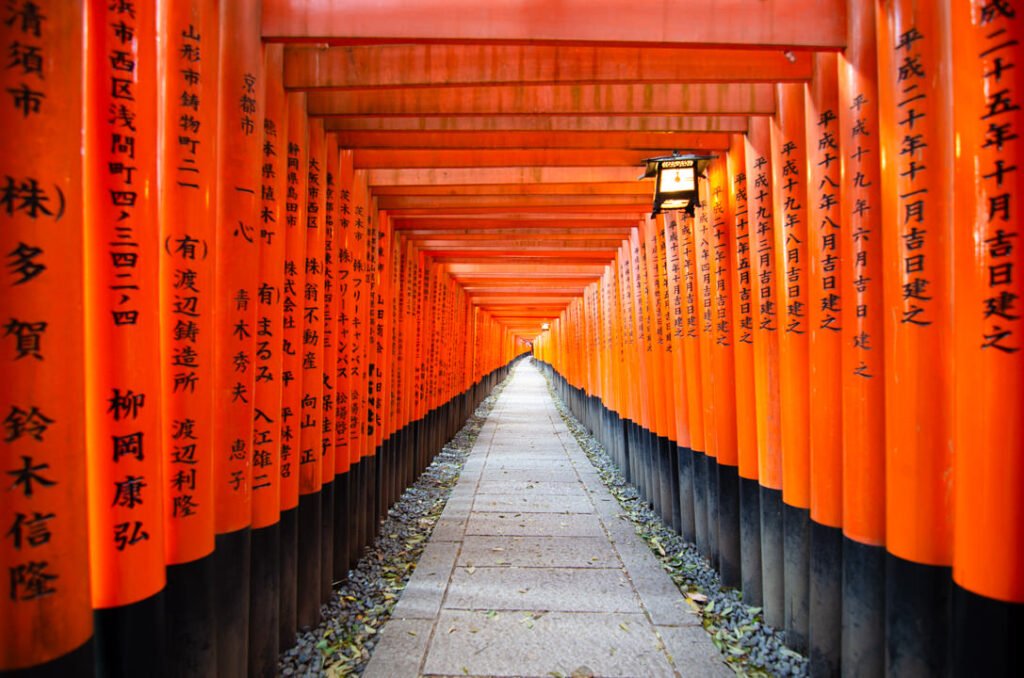
With my Nikon D810 and 14-24mm lens I captured the image below of Fushimi Inari shrine in Kyoto, my favourite city to visit. There are 10,000 of these orange gates (or torii) snaking 4km to the top of a mountain. Each gate was funded by individuals whose names are imprinted on them.
My first impression when I stood in the tunnel of gates was that there were powerful orange and black diagonal lines that would lead the eye in from the corners of the image, but also horizontal and vertical lines of the gates themselves which act as a frame. The solitary lantern provides an interesting non-symmetrical feature and is placed on the top right intersecting rule of thirds line.
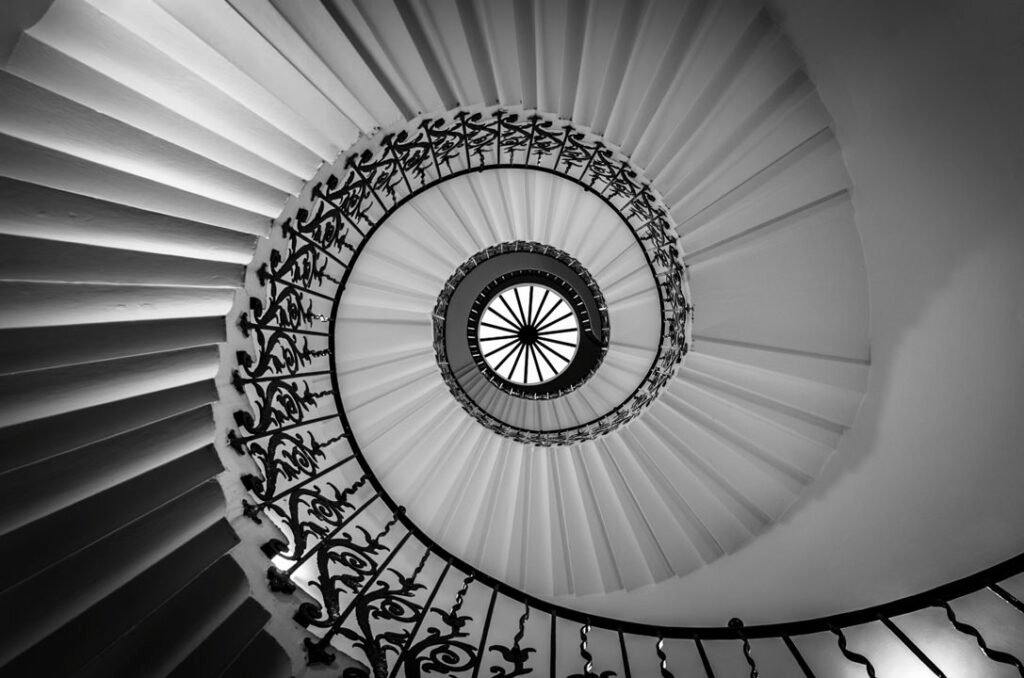
Leading lines don’t need to be straight. To get the shot below of the Tulip Staircase in Greenwich London, I used the 14-24mm lens to capture the most of the small space. I lay on the ground looking up towards the glass ceiling and angled the camera so that the swirl of the bannister and staircase would start in the bottom right corner and perfectly lead the eye up the underside of the stairs to the glass window at the top. Light plays a key role here too because the highlights on the left-hand of the staircase and the shadows on the right encourage the journey upwards
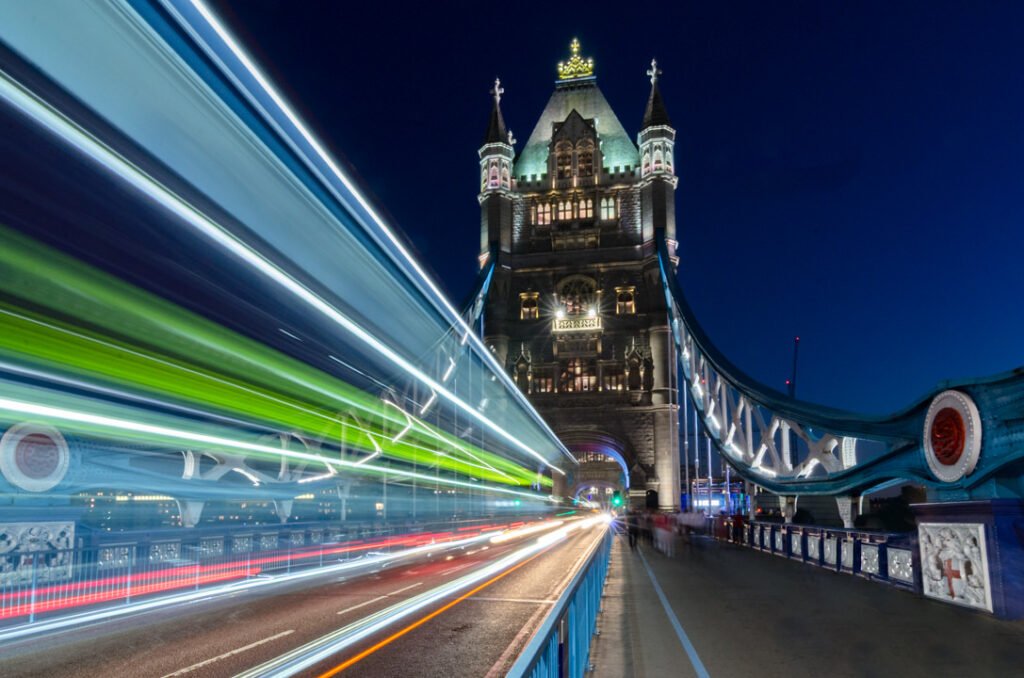
Light trails provide fantastic guiding lines at nighttime. My goal in the shot below was to use a long exposure to capture the lights from moving traffic in a way that would lead the viewer towards the tower. I captured a large blue truck which provided the main downwards diagonal line while the headlights of cars created white upward trails – together making the “golden triangle” leading towards the arch of the tower. The blue trail also provides some colourful symmetry with the sides of the bridge.
Symmetry
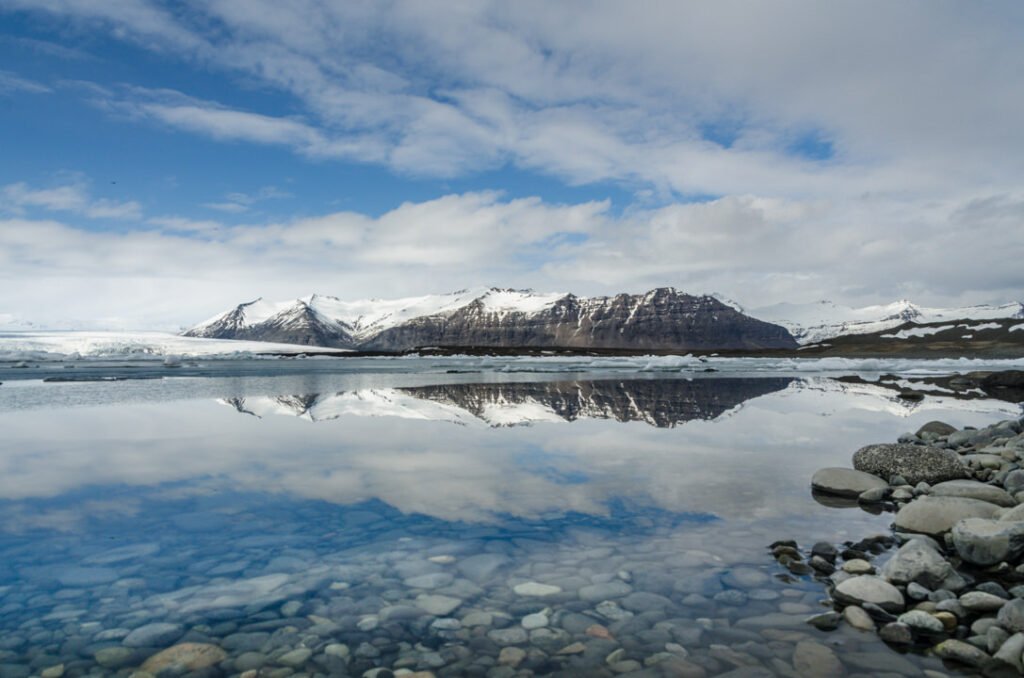
Symmetry can be found often in nature and architecture. In calm waters, reflections can provide a great symmetrical composition for your shots. Jokulsarlon lagoon in Iceland is a wonderful place where chunks of melting ice break off the glacier in the background (left) and float through the lagoon and out to sea. I deviated from the rule of thirds here to make the central mirror image of the mountains the focal point , but left enough space surrounding to provide interesting clear water foregrounds and background cloud formations.
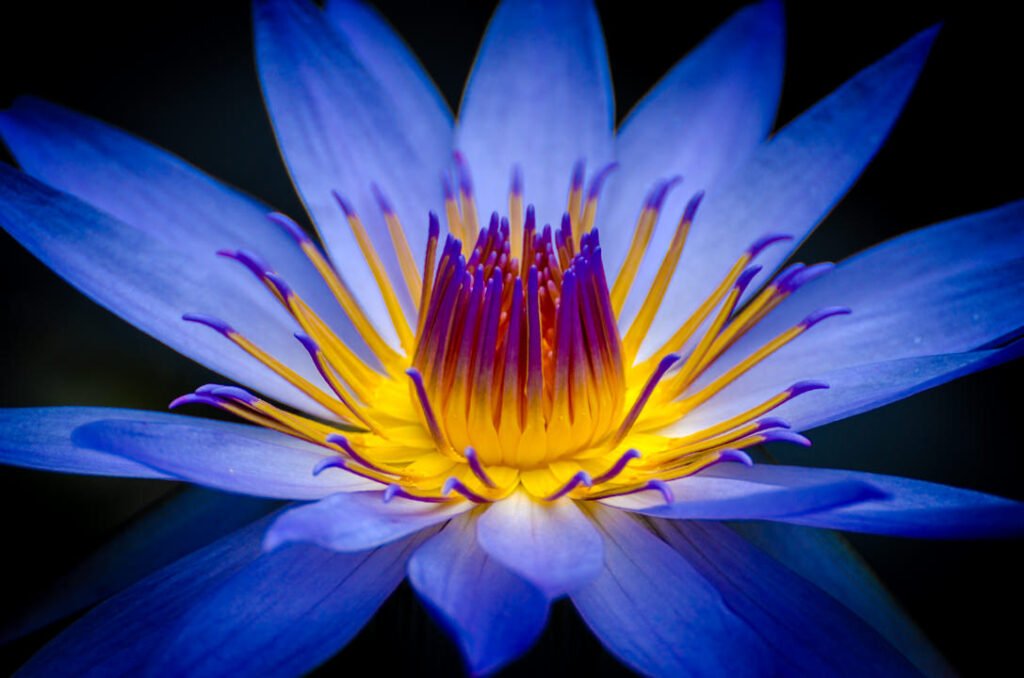
Conversely with the waterlily image below, I wanted the flower to fill the frame and the beautiful symmetry of the bold blue and yellow petals to stand out with no distractions from its surroundings. Shooting from a distance with a 70-300mm lens zoomed in at high aperture (low f/stop) meant that I could get the crisp detail of the centre of the flower but lose focus towards the edges. This is another technique for focusing the eye on the subject.
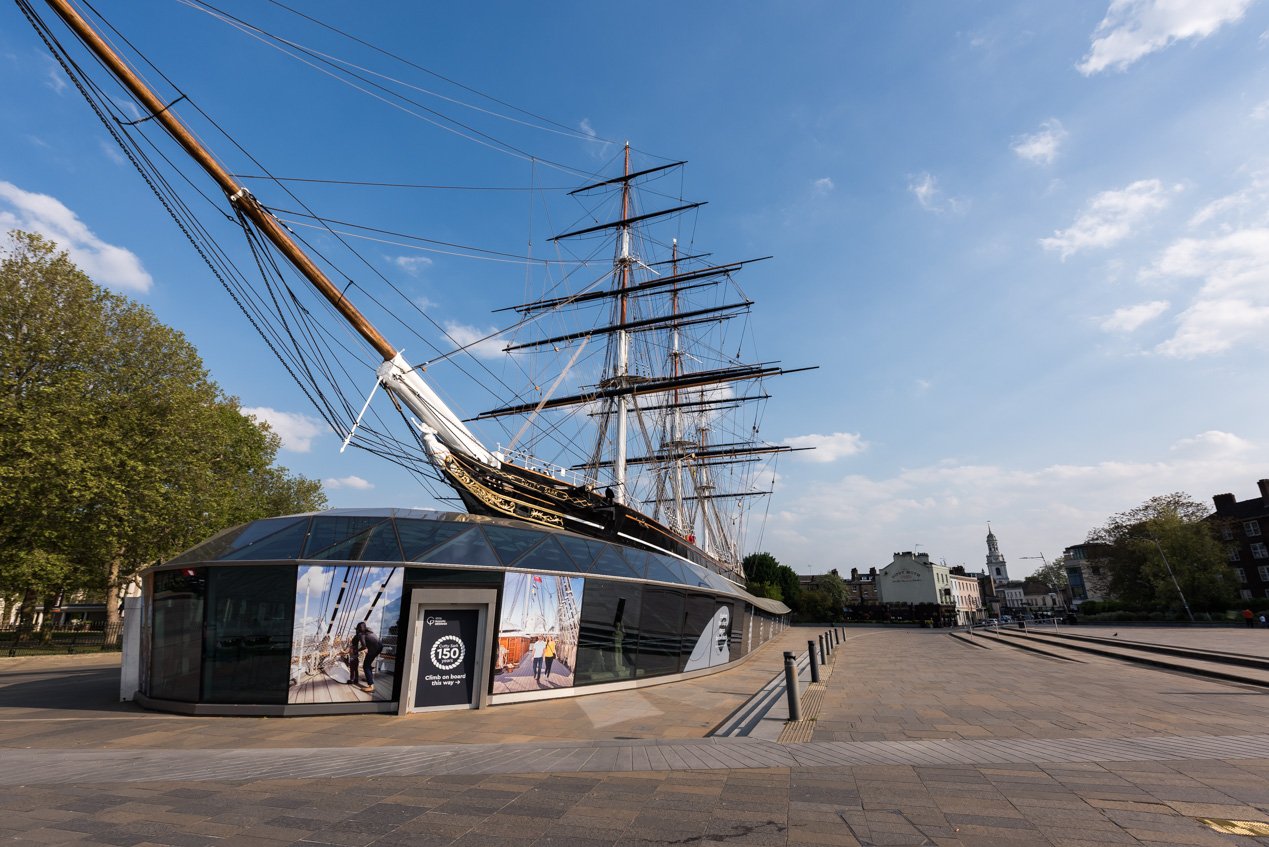
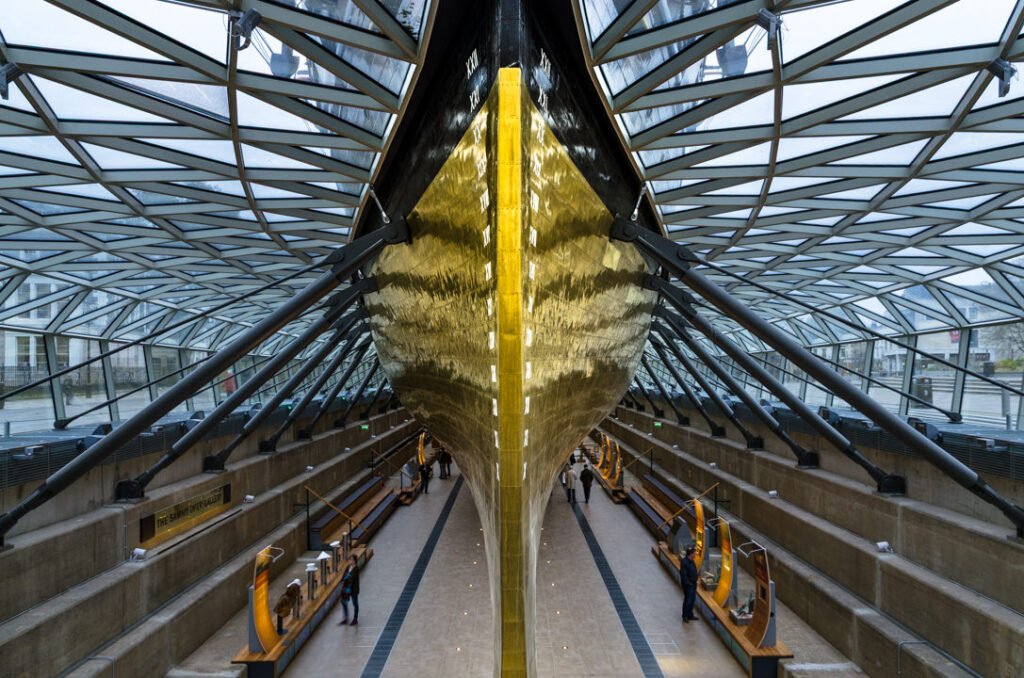
When shooting architecture, I will often look as to how I can incorporate symmetry. There’s something very pleasing to the eye of being able to look down either side of the Cutty Sark and the beams in the glass roof and see a perfect mirror image. Breaking the symmetry with people can be a good way of adding in unexpected focal points. I used a Nikon 24-70mm lens to capture this image of the historic sailing ship.
Timing and patience
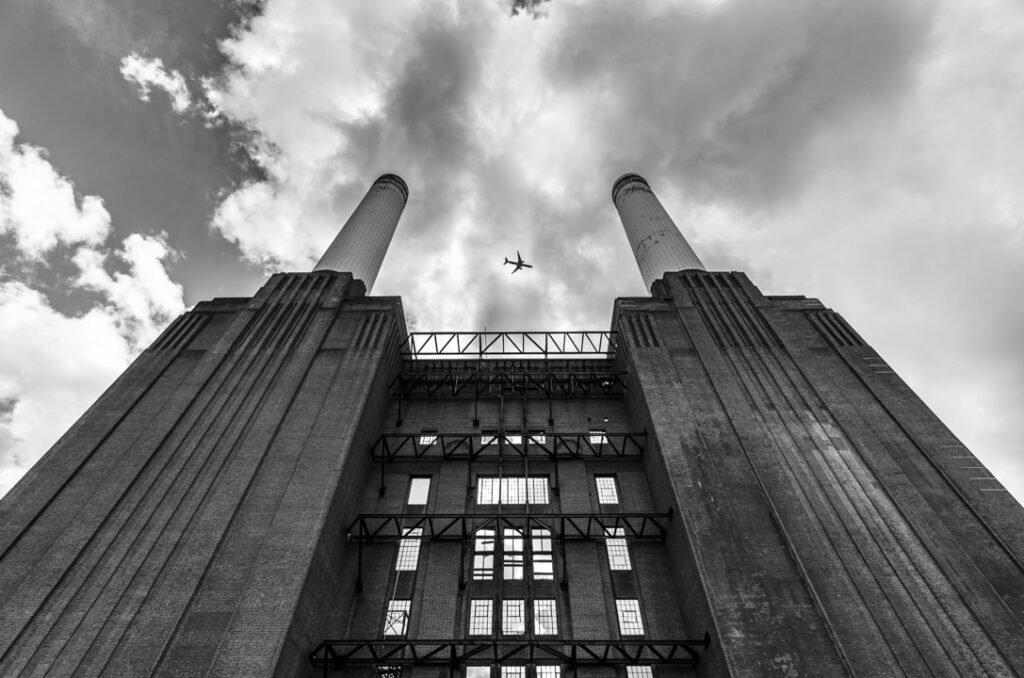
The rules of composition help you frame your story and guide your viewer, but with so many similar photographs taken in the same locations nowadays it’s also important to take time to find that extra feature that makes your photography unique. In my image below, even though the architectural design of Battersea Power Station is magnificent, I had to think hard to get a shot that I hadn’t already seen. It took a long while for the perfect timing of the plane to be silhouetted against a white cloud right in the middle of the two towers, but to me that added the extra interest I’d been looking for.
This shot of Oia at sunset is a must-take image for photographers who visit Santorini. The beautiful white buildings and the windmill perched on the jagged cliffs before the sea. Space is a limiting factor in this location as many tourists gather to watch the sun go down, but with my Nikon 14-24mm lens in hand I managed to find somewhere I could line up the galleon to pass through the sun’s reflection, creating a striking shadow in the sea, and adding more interest to the story.

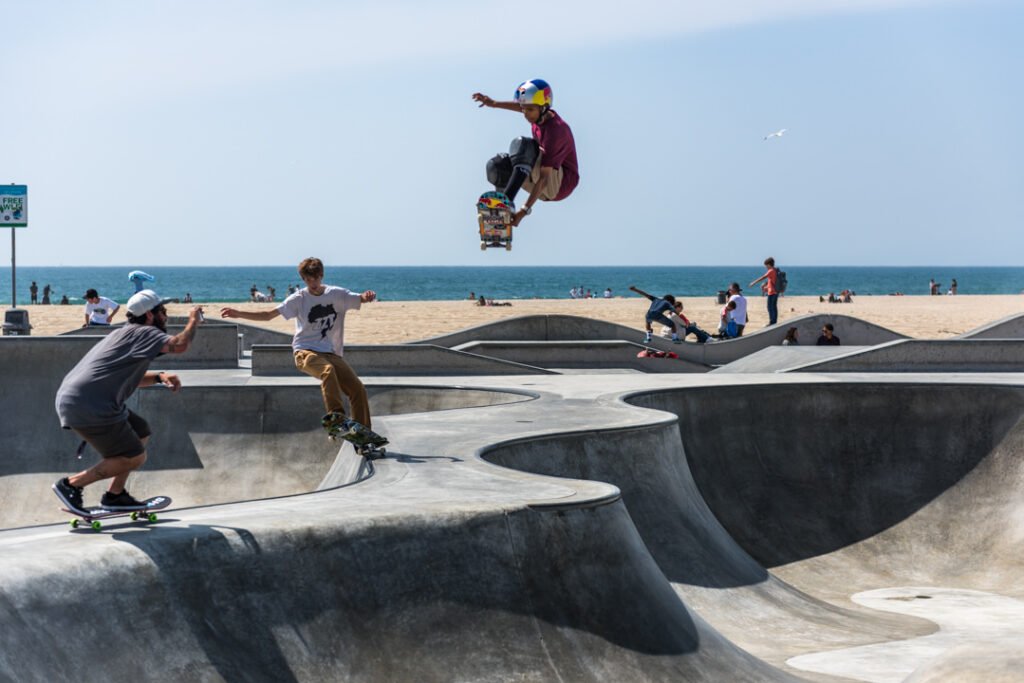
This is one of my favourite shots, from Venice Beach, Los Angeles. The skateboarder in the dead centre of the picture is clearly the focal point but there are so many other stories going on around him, from the guy also on skateboard filming him, to another man trying to land a jump in the background, coupled with the beautiful leading lines and shadows from the skate-park. In this case, once I’d set up the placement of the non-moving parts of the image it just took a little patience to let the scene compose itself.
It’s all of these factors which help make a good photograph great. Whether it’s careful composition, clever use of symmetry and lines or simply being patient, you can use all of these elements to communicate with the viewer and that’s what photography is all about – storytelling.